
The evening wind-down entry: how to close your day on purpose
Three sentences before bed. The simplest thing you can do to start tomorrow clearer, calmer, and more intentional.
For most people, the day never really ends. You put the phone down, the lights go off, and tomorrow begins before yesterday was ever processed. The unfinished tasks, the lingering conversation, the thing you meant to follow up on: all of it carries forward, fuzzy and unresolved.
A wind-down journal entry is the simplest fix for this. Three sentences, maybe five minutes, before you sleep. It closes the loop the day left open.
What a wind-down entry actually is
It is not a diary. It is not a summary of your day. It is a short act of deliberate closure, a moment where you decide what to set down and what to carry forward. Something like: closed the unfinished tasks, set priorities for tomorrow, signed off calmly.
An entry like that takes less than two minutes to write. But the act of writing it (naming what is done, naming what is not, deciding what tomorrow starts with) has an outsized effect on how the next morning feels.
A simple three-part structure
You do not need a template, but having a loose structure helps on tired evenings. Try answering just these three things:
- What did I close today? Name one or two things you actually finished: a task, a conversation, a decision. Even if the day felt unproductive, something got done.
- What is staying open? One thing you did not finish and are consciously choosing to leave until tomorrow. Writing it down means your brain does not need to hold it overnight.
- What does tomorrow start with? One clear intention. Not a to-do list, just a first move. “Start with the draft” or “reply to that email first” is enough.
That is the whole entry. Three answers, each one or two sentences. Done.
Writing it in Daykept
Tap + to start a new entry and pick how you feel: tired, calm, wound up. Give it a title like “Wind-down” or leave the title blank and write directly in the body. Put it in a notebook and add a tag so it is easy to filter later.
Two things make it stick:
- Use a template. Daykept's free Evening Wind-Down template gives the entry a ready-made structure. Its three questions are a little different: what went well, what challenged you, what you're letting go of before sleep. Prefer the three above? Save them as your own template once and reuse them every evening.
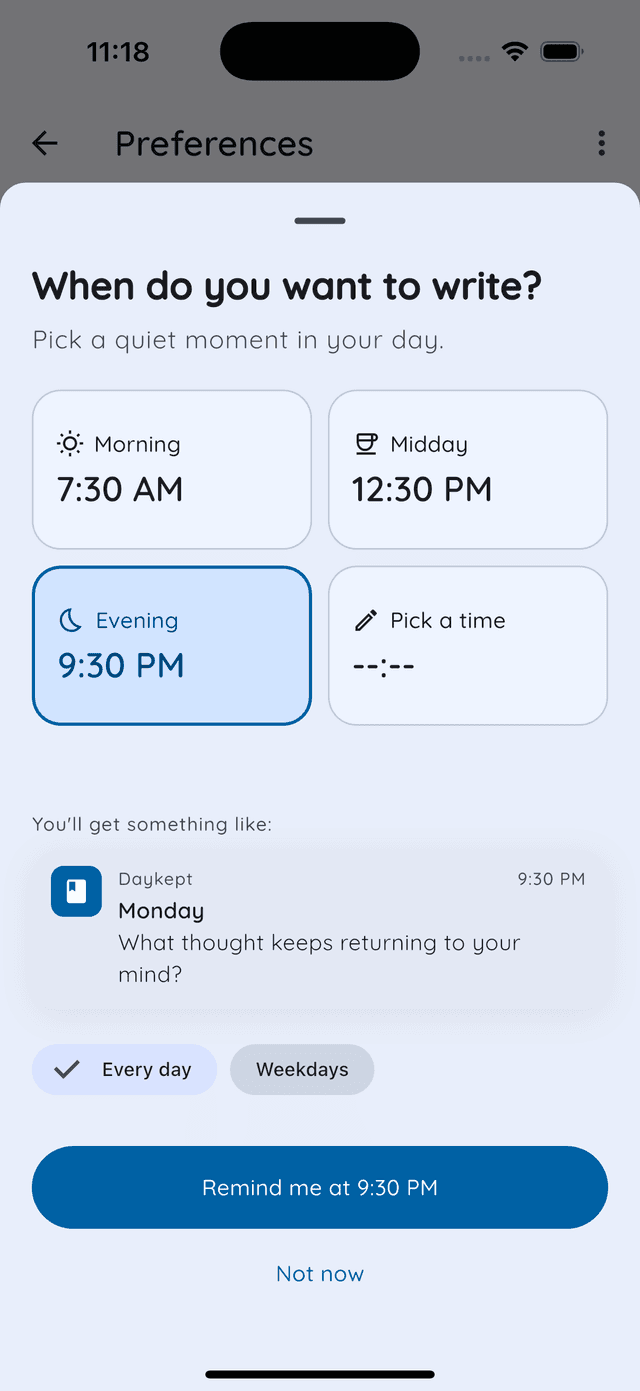
- Set an evening reminder. Pick Evening (or your own time) in Daykept's reminder, every day or weekdays only. The reminder arrives with a question to start from, so you never open a blank page at 10pm.
Why evenings work better than mornings for this
Morning journaling is great for intention-setting. But closure requires distance. You cannot close a day that has not happened yet. Writing in the evening means you are working with what actually occurred, not what you hoped would occur.
It can also make it easier to switch off. Writing down what is unfinished gets it out of your head and onto the page. You have told yourself: this is noted, it will be handled.
There is some research behind this. In a small sleep-lab study, young adults who spent five minutes writing a specific to-do list at bedtime fell asleep faster than those who wrote about tasks they had already finished (Scullin et al., 2018). So keep the last two answers (what is staying open, what tomorrow starts with) as specific as you can.
What it looks like after a week
After seven wind-down entries, your home timeline starts to show something useful: a record of how your days actually ended. You can scroll back and see which evenings felt clear and which felt scattered. The pattern of which days consistently leave things open tells you something about your week worth knowing.
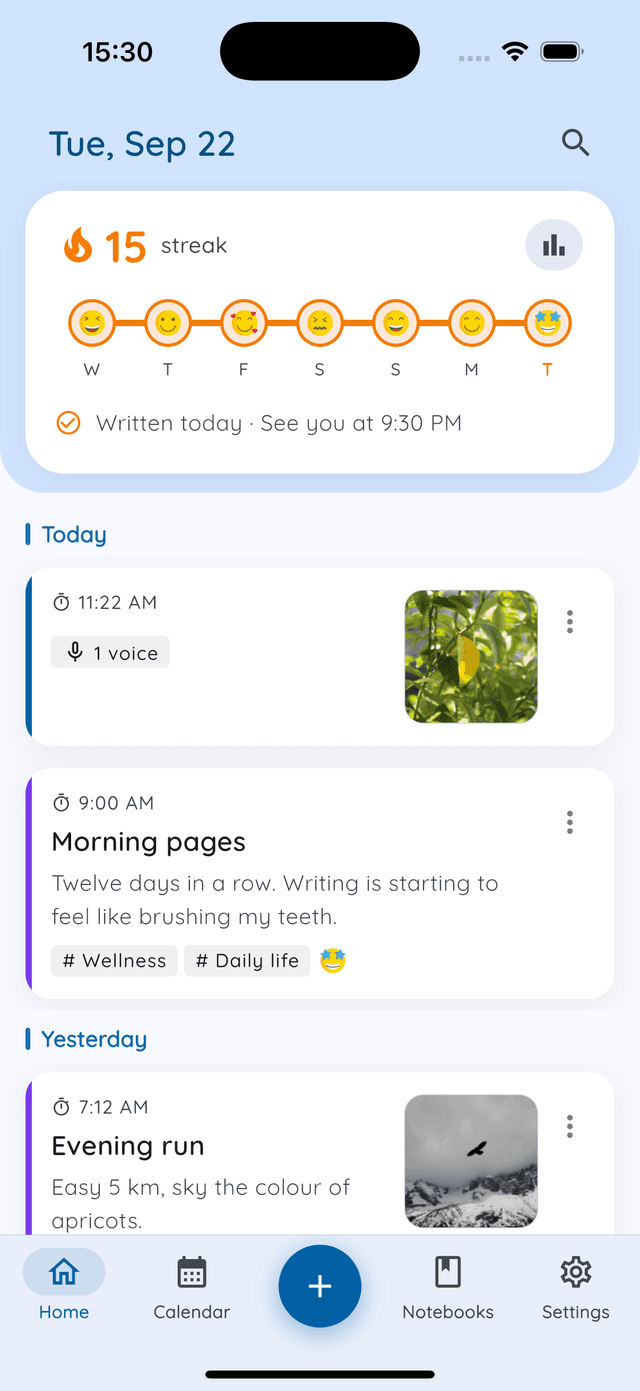
The wind-down entry pairs naturally with the weekly review. Once a week, instead of just reading each entry, look at the closing intention you set the night before and compare it to how the next day actually started. Small adjustments compound.
Ready to take it further? Read about the weekly review, the ritual that turns a week of entries into actual insight. Or start simple with building a daily journaling habit.
Free template for this: Evening Wind-Down has the exact questions, a filled-in example and how to open it in Daykept.
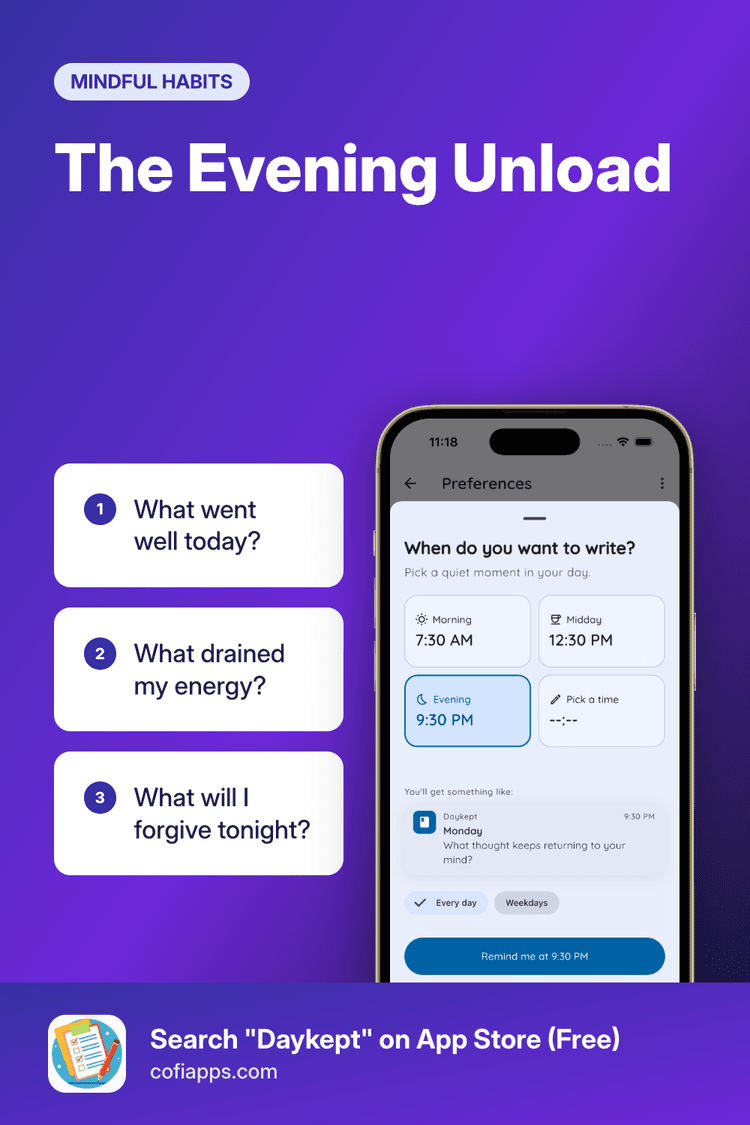
Try Daykept, a gentle journal built around how you feel
Free to download. Writing is free forever. No account needed to start.
Learn more →