
The weekly review: how 10 minutes on Sunday changes your week
A simple weekly ritual using Daykept's calendar and timeline to close the week intentionally and start the next one clear.
A daily journal entry captures what happened. A weekly review makes sense of it. Without a weekly pass through your entries, each day is just a note: accumulated, unprocessed, eventually forgotten. Ten minutes once a week turns those notes into something you can actually use.
Why the weekly review matters
The brain is good at experiencing things and bad at remembering them accurately. You can have a genuinely good week and, by Sunday, feel like nothing went well, because the hard parts are more emotionally available than the wins. Going through your entries reverses this: it gives you a factual record of what actually happened, not just how you feel about it in retrospect.
It also surfaces patterns that are invisible day-to-day. You might notice that your energy is consistently low on Thursdays, that your best work happens on Tuesday mornings, or that your mood improves every week you exercise more than three times. These patterns are hidden inside your daily entries, and the weekly review brings them out.
When to do it
Pick a consistent time and protect it. Sunday evening works for most people: the week has just ended and the next week has not yet started, so the review feels relevant rather than retrospective. Some people prefer Friday afternoon, before the weekend begins.
The specific time matters less than the consistency. Same time, same day, every week. After four or five repetitions it becomes a reflex rather than a decision.
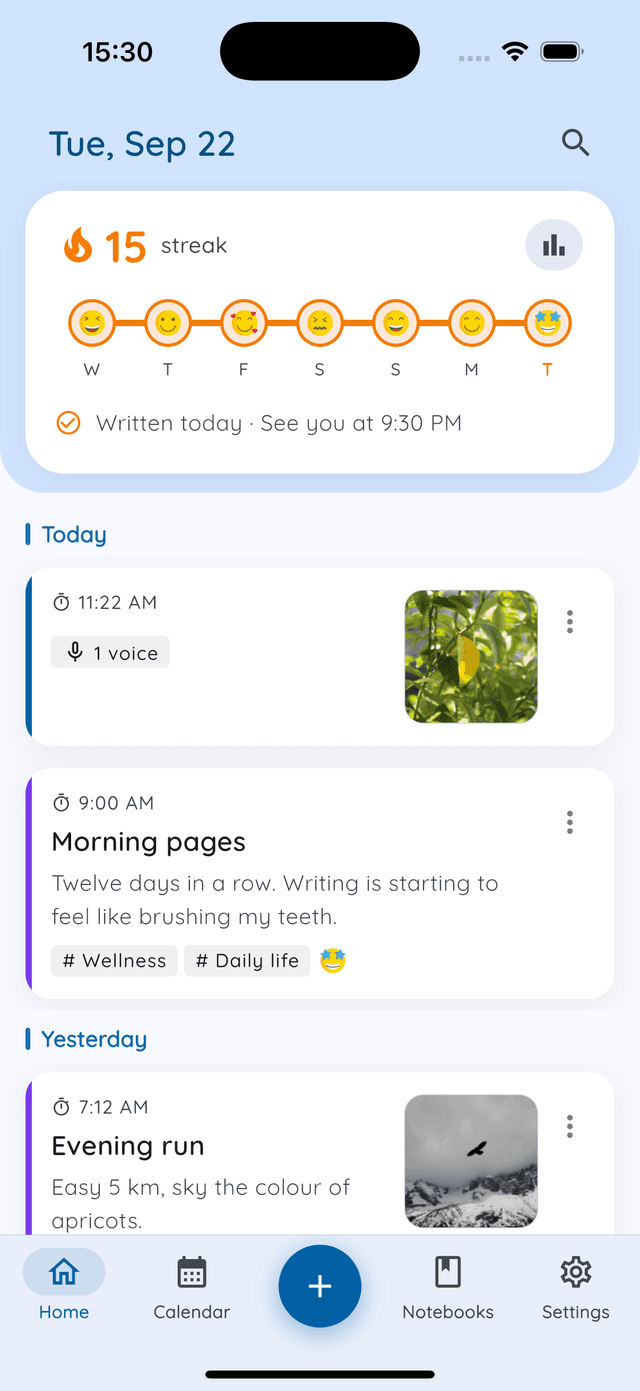
Daykept nudges you at the right moment: on Sunday evening and Monday, the top of your Home screen turns into a short weekly recap: your streak, how many words you wrote, your seven days at a glance, a line you wrote that week, and a way into that week's report. It is a natural cue to start the review.
Step 1: Open the calendar
Start with the Calendar tab. You will see the current month with a mood on each day you wrote. Before you read anything, just look at the pattern: how many days did you write this week? Are there gaps? Were the gaps expected or not?
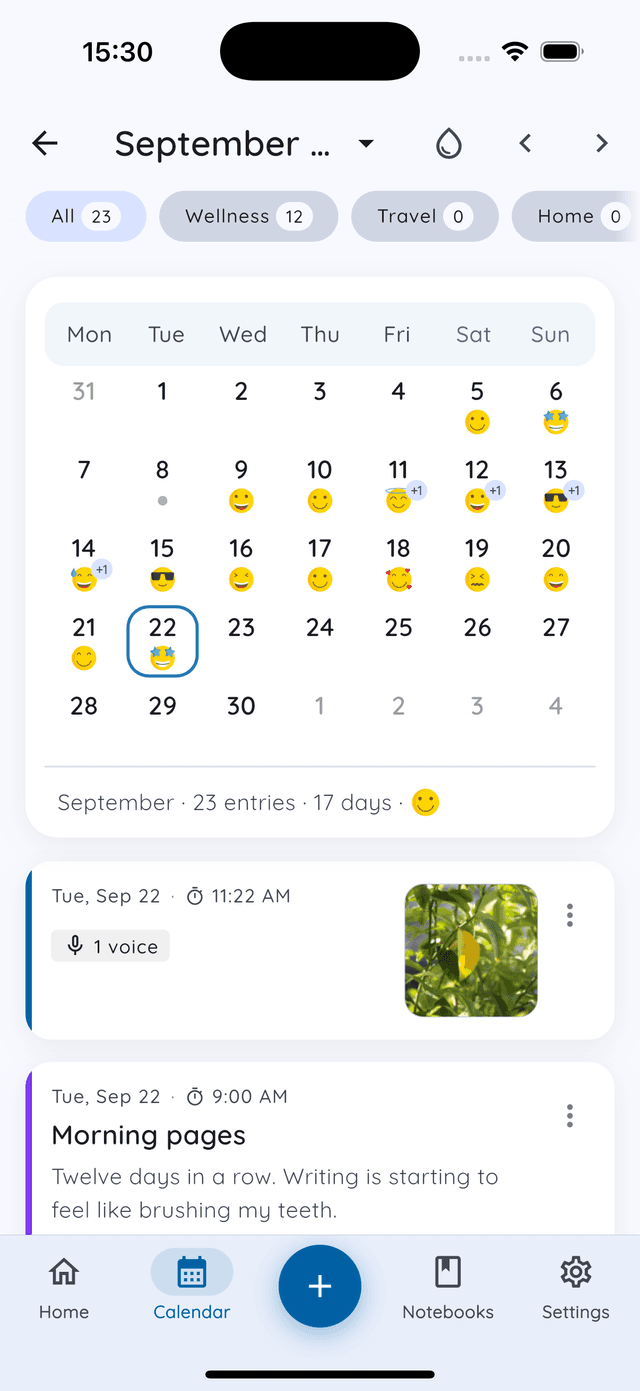
The calendar is not there to make you feel guilty about gaps. It is a fact. If you missed three days, that is information. It tells you something about the week, not about your character.
Step 2: Read through the week’s entries
Switch to the Home timeline and scroll to the start of the week. Read each entry without editing or judging. You are looking for three things:
- Themes. What topics came up repeatedly? Work stress, a specific relationship, physical energy, a project?
- Surprises. What happened that you had forgotten? What felt big at the time but looks small now?
- Wins. What did you do well? Include small things: finishing a task, a conversation that went well, a moment of rest you actually took.
Step 3: Answer three questions
After reading, write a short weekly summary entry, or just answer these three questions in your head:
- What went well this week? Name at least two things, however small.
- What was harder than expected? Not to criticize yourself, but to understand what to plan around next week.
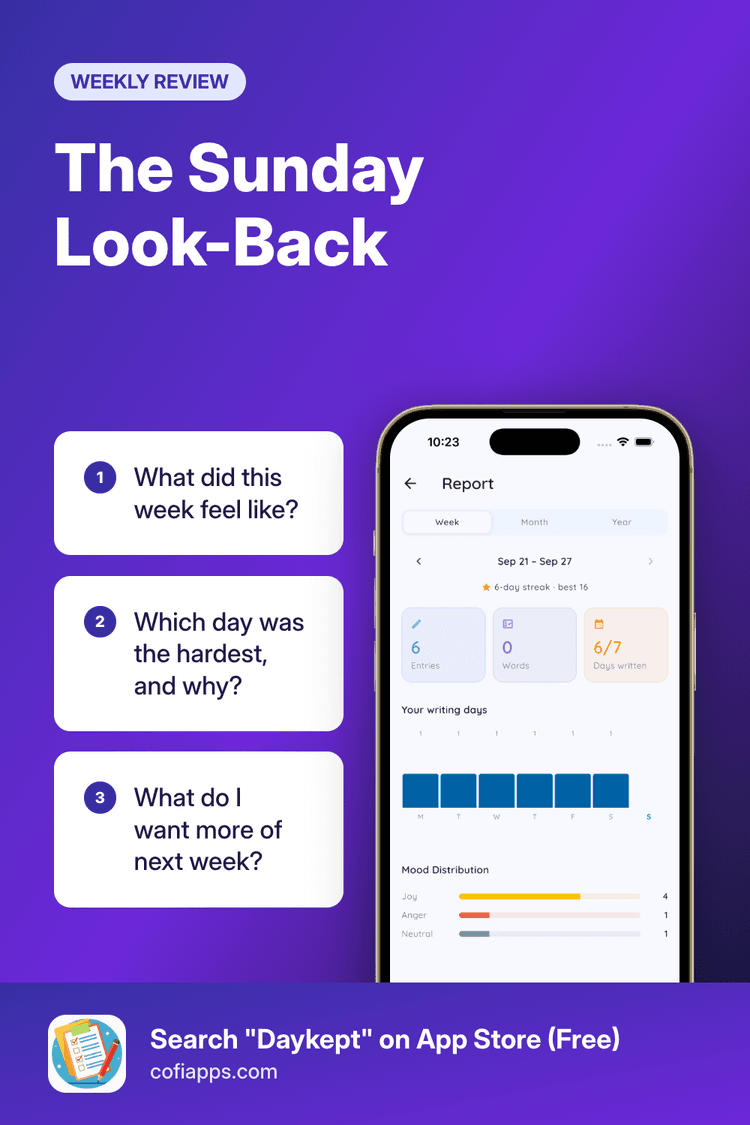
- What do I want more of next week? One specific thing: more sleep, more focused work, more outdoor time, more conversations.
That third question is the most important. It turns the review from a backward-looking audit into a forward-looking intention. You are not reviewing the week to document it. You are reviewing it to design the next one slightly better.
Prefer to write it down? Daykept's free Weekly Review template asks a close version of the same three: What went well? What didn't go as planned? What will I focus on next week?
Keep it short
Ten minutes is enough. If you find yourself going longer, you are probably writing a separate journal entry, which is fine, but it is a different thing. The review is a scan, not a deep dive. Fast and consistent beats thorough and occasional.
After a month of weekly reviews, you will have four data points about what kind of weeks you have. After three months, you will start to see real patterns. After a year, you will have a record of your life that most people wish they had kept.
If you are just getting started with daily entries, read how to build a daily journaling habit first. Once you have entries to review, make them easier to find with tags and notebooks.
Free template for this: Weekly Review has the exact questions, a filled-in example and how to open it in Daykept.
Try Daykept, a gentle journal built around how you feel
Free to download. Writing is free forever. No account needed to start.
Learn more →