
What is a daily check-in, and why keep it lightweight?
A daily check-in takes ten seconds to five minutes. What to write, the two-question format, examples, and how short check-ins reveal patterns without burnout.
A daily check-in is a short pause to notice how you are: your mood, what is on your mind, maybe one highlight or one hard thing. It is not a 2,000-word journal entry. It can take ten seconds. The point is not writing well; it is showing up often enough to see patterns.
Why lightweight beats elaborate
Long journals fail when life gets busy. The first stressful week, the elaborate routine is the first thing to go, and once it has gone, it rarely comes back.
A check-in survives because the bar is low enough to clear on a bad day. And the bad days are exactly the ones you most want on record. After two or three weeks you start to see things you could not see day to day: which weekdays drain you, whether "busy" weeks actually felt good, what tends to come before a rough patch.
The two-question check-in
If you only remember one format, make it this one. It is Daykept's free Daily Check-in template, and it asks two things:
- How are you feeling today?
- What's been on your mind?
That is it. One or two sentences each. The template's own note says it well: take a minute to write honestly. No judgment, just awareness.
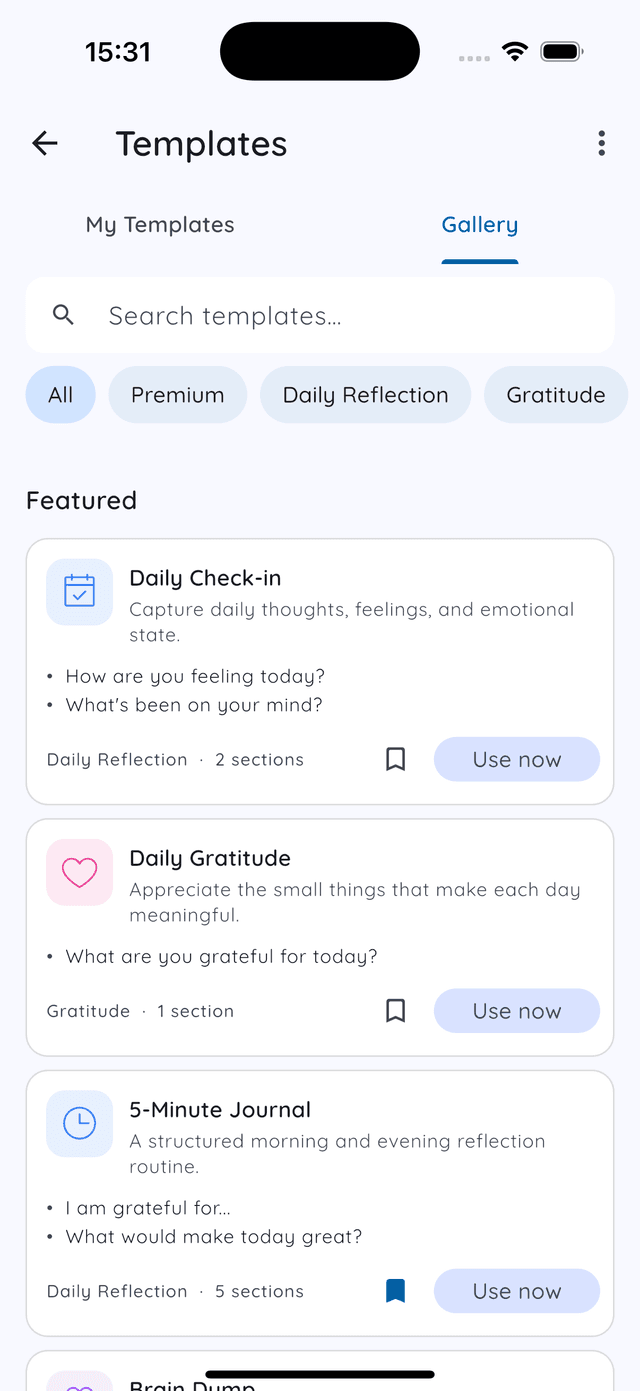
Three sizes of check-in
Match the check-in to the day you are having:
- 10 seconds: just the mood. Every Daykept entry starts by picking how you feel, from 50 moods in six groups. On the busiest days, that alone is a check-in.
- 2 minutes: the two questions. Mood, then a line or two on how you feel and what is on your mind.
- 5 minutes: a little structure. The 5-Minute Journal template adds gratitude and one thing that would make today great in the morning, and three good things from the day at night.
What it can look like
Real check-ins are short and a little messy. For example:
- Tired but okay. Mind on the presentation Thursday. More nervous than I'm admitting.
- Good day. Walked at lunch for the first time in weeks and felt the difference all afternoon.
- Low. Nothing specific. Slept badly again.
None of these would impress anyone. All three are useful a month later, when you scroll back and notice that the low days follow the bad nights.
Make it automatic
- Pick one time. After dinner, before bed, with your morning coffee. Attach it to something you already do.
- Set a reminder in Daykept for that time: morning, midday, evening or your own, every day or weekdays only.
- Start from your home screen. Daykept's widget opens a new entry in one tap and shows your streak.
- Use the prompt when you are stuck. A new question waits on Home and in the editor each day.
Look back once a week
Checking in is half of it; the other half is glancing back. Once a week is enough. On Sunday evening and Monday, Daykept's Home screen shows a short weekly recap with how many days you wrote and a way into that week's report. The mood calendar shows the whole month at a glance.
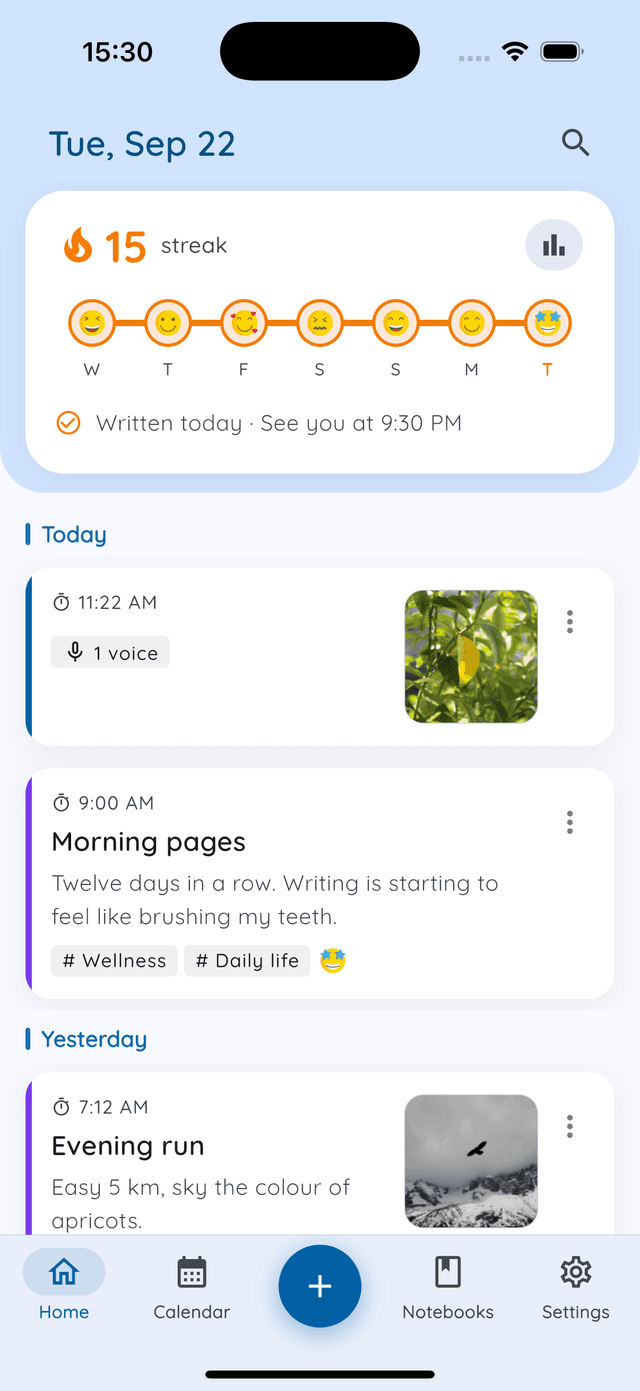
Do not grade yourself. Ask one question: what do I want more of next week? For a fuller version, see the 10-minute weekly review, or learn how to read patterns in a mood journal.
Privacy matters here too
Feelings and health notes are sensitive. Daykept needs no account to start, shows no ads and never sells your data. You can lock the app with a PIN, Face ID or fingerprint, and export everything you write.
Frequently asked questions
How long should a daily check-in take?
Anywhere from ten seconds to five minutes. A mood on its own counts. The shorter it is, the more likely you are to keep doing it on busy days.
Is a daily check-in the same as journaling?
It is the smallest form of journaling. A check-in captures how you are and what is on your mind; a longer journal entry explores it. Many people check in daily and write longer only when something needs space.
Morning or evening?
Whichever you will actually do. Evening check-ins are good for looking back on the day; morning ones for setting a direction. Pick one time and attach it to something you already do.
What if I miss a day?
Nothing breaks. Daykept's streak has grace days, so one missed day does not erase your progress. Just check in today.
Ready to make it a habit? Start with how to start a daily journaling habit, or grab a question from our daily journal prompts.
Free templates for this: Daily Check-in, Self Check-in. Each one has the exact questions, a filled-in example and how to open it in Daykept.
Try Daykept, a gentle journal built around how you feel
Free to download. Writing is free forever. No account needed to start.
Learn more →