
How to write an unsent letter — and why it helps
An unsent letter lets you say everything you couldn't say out loud, to someone who will never read it. How to write one, step by step, with prompts.
Some things never get said. The apology that came too late. The goodbye there wasn't time for. The thing you wanted to tell someone who hurt you, or someone you lost, or yourself ten years ago.
An unsent letter is a place to say it anyway — fully, honestly, to someone who will never read it. That last part is the point. Daykept's template says it in one line: No one will read this. That's what makes it safe to say.
Why an unsent letter helps
When a feeling has nowhere to go, it tends to circle. Writing it as a letter gives it a direction: a person to address, a beginning and an end. You get to finish the conversation on your own terms, without worrying how it lands.
People write unsent letters to:
- someone who has died,
- an ex, or a friend they've drifted from,
- a parent, a boss, anyone they couldn't be honest with,
- their past or future self.
How to write one: four parts
Daykept's free Unsent Letter template breaks it into four short sections. You can use the same structure on paper.
1. Dear...
Start with their name, the way you'd actually address them. It sounds small, but naming the person shifts you from thinking about them to talking to them.
2. What I never said
This is the heart of it. Write what you held back — the anger, the thanks, the apology, the question. Don't soften it. Nobody is going to be hurt by this page.
3. What I wish you knew
What do you wish they understood about you, about what happened, about how it felt? This part is often gentler than the last. That's normal.
4. What I'm choosing to release
End by naming what you're ready to put down — a grudge, a regret, a hope that isn't coming. You don't have to feel finished. Writing it is a start.
A few tips
- Write it in one sitting if you can. Stopping halfway tends to leave you in the hardest part.
- Expect feelings to come up. That's the letter working. Take a break if you need one.
- Don't send it. Even if you're tempted afterwards, wait a few days. If there's something you genuinely want to say to them, write that separately.
- Keep it, or don't. Some people reread their letters months later; some prefer never to see them again. Both are fine.
Keep it private
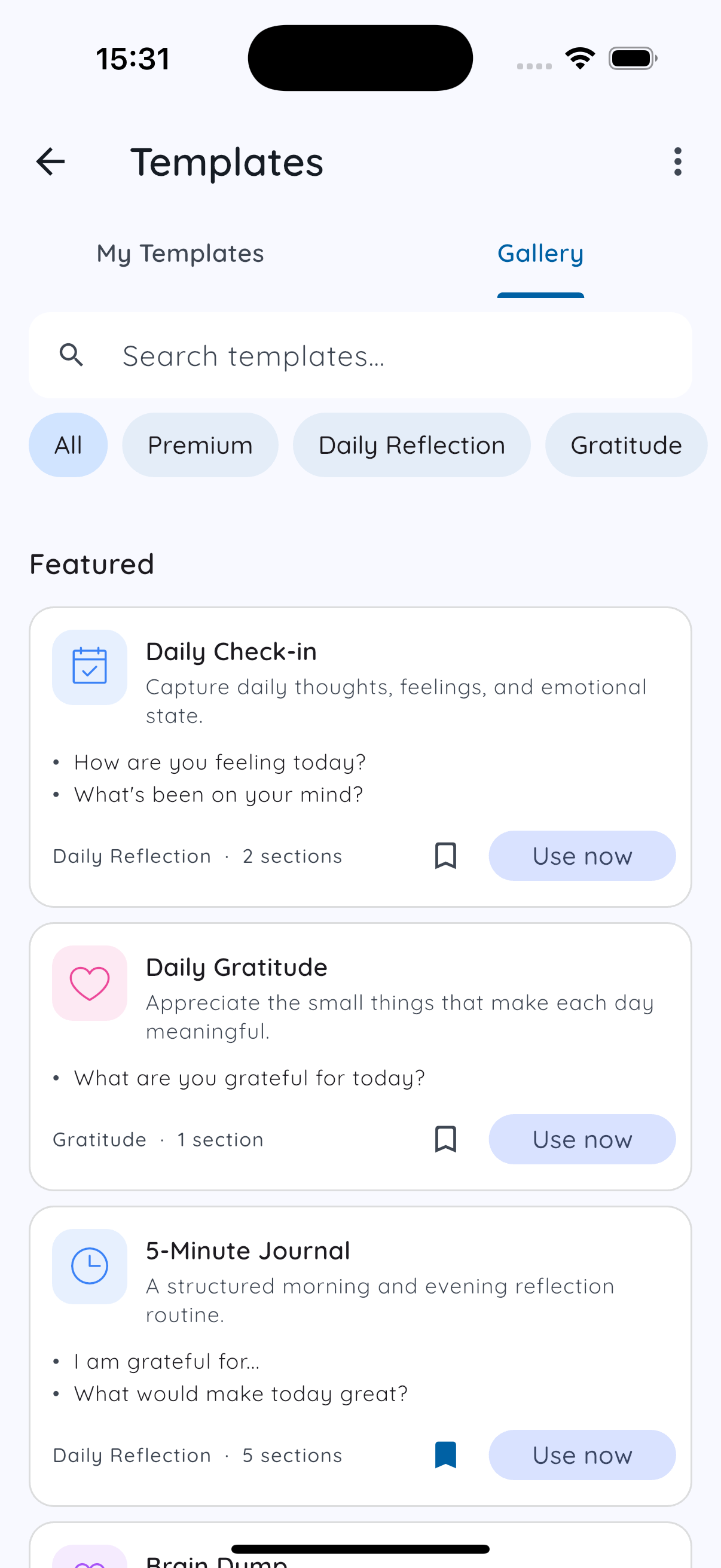
In Daykept, Unsent Letter sits in the Emotions group alongside Anxiety Release, Anger Journal and Grief & Loss — all free, always. You can lock the whole app with a PIN, Face ID or fingerprint, so your letters stay yours.
When it's grief
If you're writing to someone you've lost, Daykept's Grief & Loss template may help too: What am I missing or mourning? A memory I want to hold onto. What I wish they knew. What small step can I take today? There's no schedule for grief — write as much or as little as you need.
And if the weight is too much to carry on your own, please reach out to someone you trust or a professional. A letter can hold a lot, but you don't have to hold it alone.
For other hard days, see these gentle journal prompts for anxiety.
Try Daykept — a gentle journal built around how you feel
Free to download. Writing is free forever. No account needed to start.
Learn more →