Sinking funds: how to stop "unexpected" expenses from wrecking your budget
Car repairs, gifts, annual bills: most surprises are predictable. How to list your sinking funds, work out the monthly amount, and where to keep the money.
Most "unexpected" expenses aren't unexpected at all. You know the car needs tires eventually, the holidays come every December, and the insurance renews on the same date every year. They only feel like emergencies because they don't arrive every month.
A sinking fund fixes that: you set aside a little every month for a specific future expense, so when it comes, the money is already there.
Sinking fund vs emergency fund
- Emergency fund: for things you can't predict — losing a job, a medical emergency. One pot, three to six months of essential costs, and you hope not to touch it.
- Sinking funds: for things you can predict, just not monthly. Several small pots, each with a target and a date, and you plan to spend them.
Without sinking funds, the predictable things end up coming out of the emergency fund — or a credit card.
Common sinking funds
- Car: maintenance, tires, registration, insurance if paid yearly
- Holidays and gifts, birthdays
- Annual subscriptions and memberships
- Medical and dental: co-pays, glasses
- Home: repairs, appliances; for renters, moving costs and deposits
- Travel
- Pets: vet visits
- Clothing, school costs, phone or laptop replacement
Pick the three to five that hit you hardest. You can add more once the habit sticks.
How much to put aside each month
Target amount ÷ months until you need it.
| Fund | Target | Needed in | Per month |
|---|---|---|---|
| Car registration | $240 | 8 months | $30 |
| Holiday gifts | $600 | 3 months | $200 |
| Annual subscriptions | $480 | 12 months | $40 |
| Car maintenance | $900 | 12 months | $75 |
| Dental | $360 | 6 months | $60 |
| Summer trip | $1,200 | 10 months | $120 |
| Total | $525 |
(Example numbers — use your own.)
If the total is more than you can manage, push dates out or shrink the targets — a half-funded holiday fund is still better than an empty one. Starting late (holidays in three months) costs more per month; next year the same fund is $50 a month.
To find your annual bills, look through a year of statements, or add up yearly subscriptions — the subscription audit covers that.
Where to keep the money
- One savings account, several funds on paper. Simple: one balance, and a list or spreadsheet saying how much of it belongs to each fund.
- Separate savings "buckets." Many banks let you split a savings account into named pots. Easier to see, harder to borrow from by accident.
- Cash envelopes. Works for small funds like gifts; not great for anything larger.
Whatever you choose, keep it out of your everyday account, so it doesn't look like spending money.
When the bill arrives
Pay it from the fund, not from this month's budget. That's the point: the car repair was planned, so it doesn't count as overspending. If the fund was short, top it up from next month and raise the monthly amount.
Doing this in Cashvelope
Cashvelope doesn't have a sinking-fund or savings-goal feature with targets and progress bars — so be clear about what it does and doesn't do. What works well:
- A savings account for your funds. Add an account of type Savings — one for all funds, or one per fund. Savings accounts count in your net worth, not in what you can spend.
- Transfer on payday. Move the monthly amount with Transfer. A transfer isn't spending, so your budgets stay clean.
- Pay from the fund. When the bill comes, log the expense from that savings account.
- See annual bills coming. The Subscriptions page shows yearly renewals with a yearly total, and Typical month spreads a once-a-year bill over twelve months, so your usual month isn't distorted by it (Pro · free during early access).
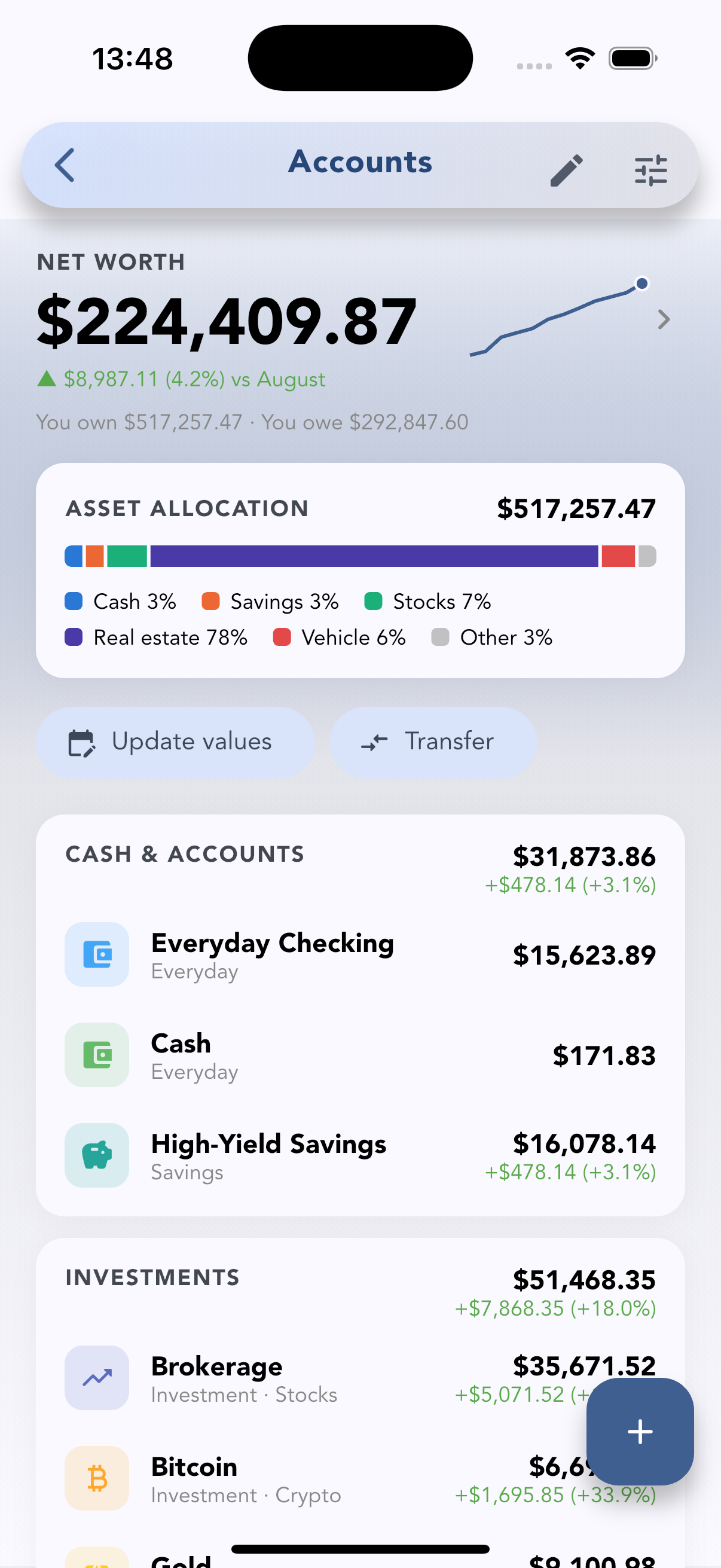
If you want targets and progress bars per fund, a spreadsheet or your bank's savings buckets will do that better. Cashvelope keeps the everyday side honest: what's left to spend, and where the money went.
Related: how to budget by paycheck (sinking funds are a good use for the third paycheck) and fixed vs variable expenses.
FAQ
How many sinking funds should I have? Start with three to five for the biggest predictable costs. Too many small funds is how people give up.
Should I build sinking funds or pay off debt first? Have a small emergency buffer first. Then fund the sinking funds for bills that would otherwise go on a card — otherwise you add new debt while paying off the old.
Do sinking funds need a separate bank account? No. One savings account with a written split works. Separate buckets just make it harder to borrow from one fund for another.