Fixed vs variable expenses: find out what you can actually cut
Split your spending into fixed, variable and once-a-year costs, work out your typical month, and see which cuts save money every month.
When money feels tight, the usual advice is "cut back". But cut what? Some costs you can change today, others only with a phone call, and some only come once a year. Sorting your spending into fixed and variable expenses tells you where the easy wins are — and what's usually left each month.
Fixed, variable and once-a-year
- Fixed expenses — same amount, same schedule: rent or mortgage, loan and car payments, insurance, phone plan, subscriptions.
- Variable (flexible) expenses — amount changes with your choices: groceries, eating out, fuel, shopping, entertainment.
- Once-a-year or irregular — fixed in size but not monthly: annual insurance, registration, memberships, holidays. They're fixed costs in disguise; divide by 12 to see their monthly weight.
Some bills sit in between: utilities recur monthly but vary. Treat them as fixed with an average amount.
Why the split matters
- Variable costs are where you can act this week. They respond to budgets and habits.
- Fixed costs take one decision — cancel, switch, renegotiate — and then save money every month without any willpower. One call to your insurer can beat a month of skipped coffees.
Work out your typical month
1. Fixed costs. List every recurring bill, plus once-a-year costs divided by 12.
2. Typical variable spending. For each flexible category, take the median of the last few months rather than the average — one holiday month shouldn't define "normal".
3. What's usually left: typical income − fixed − typical variable.
| Per month | |
|---|---|
| Typical income | $4,200 |
| Rent | −$1,350 |
| Car payment | −$280 |
| Insurance | −$120 |
| Phone + subscriptions | −$105 |
| Annual bills ($960 ÷ 12) | −$80 |
| Fixed | −$1,935 |
| Groceries | −$455 |
| Eating out | −$240 |
| Transport | −$160 |
| Shopping & fun | −$180 |
| Variable | −$1,035 |
| Usually left | $1,230 |
(Example numbers — use your own.)
What to do with the numbers
- Fixed costs over half your income? That's where the leverage is. Review subscriptions, shop insurance once a year, and ask about lower plans. Start with the subscription audit.
- Variable costs drifting up? Put a limit on the one or two categories that grew — usually food or shopping.
- Little or nothing left? Before saving more, make sure once-a-year costs have a sinking fund — otherwise they'll keep landing on a card.
Doing this in Cashvelope
Cashvelope's Typical month does this calculation from your own data (Pro · free during early access). Open it from the line on Home or the card in Report.
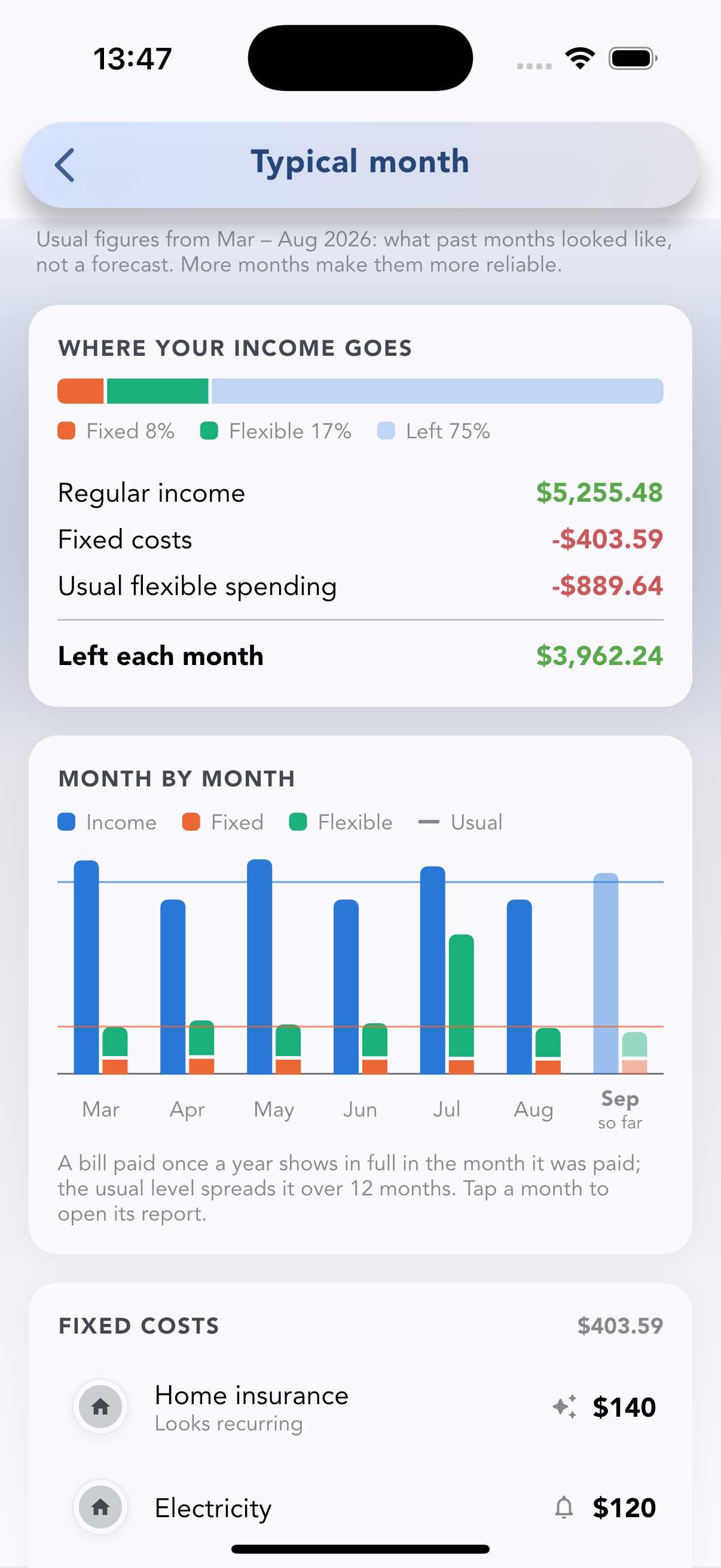
- Regular income — the median of your monthly income.
- Fixed costs — the bills you've scheduled as recurring, plus charges Cashvelope has spotted that look recurring. A yearly bill is spread over twelve months.
- Usual flexible spending — for each category, the median of your last six finished months, added up. Using each category's median drops one-off spikes, so this is a month without surprises.
- Left each month — what's usually left after both.
It's built from what already happened, not a forecast, and appears after your first full month of data. Under it, each month is listed; tap one to open its report.
To act on it: add bills as recurring transactions (they appear on the Subscriptions page with reminders), and set a budget on the flexible categories that leak.
FAQ
Is rent a fixed or variable expense? Fixed — same amount on the same date. It's usually your biggest one, which makes it the one to review when your lease is up.
Are groceries fixed or variable? Variable. You need food, but the amount depends on your choices — which is why a food budget works.
What percentage of income should fixed expenses be? There's no rule that fits everyone. If fixed costs leave too little room for flexible spending and savings, that's the sign to look at them first.