How to set a food budget you'll actually stick to (groceries and eating out)
Start from what you really spend, split groceries from eating out, pick weekly or monthly, and check what's left before you order.
Food is the category where budgets break most often. Groceries are necessary, eating out is easy, and both happen in small amounts several times a week — so the total sneaks up on you.
Here's how to set a food budget from your real numbers, keep it through the month, and adjust it without guilt.
Step 1: Find out what you actually spend
Before choosing a number, look back. Take the last three months and add up two things separately:
- Groceries — supermarket, market, bakery.
- Eating out — restaurants, takeout, delivery, coffee, lunch at work.
Use the middle month, not the average. One month with a party or a trip shouldn't set your limit.
| Month 1 | Month 2 | Month 3 | Typical | |
|---|---|---|---|---|
| Groceries | $412 | $520 | $455 | $455 |
| Eating out | $310 | $180 | $240 | $240 |
(Example numbers — use your own.)
For a sanity check on groceries, the USDA publishes monthly food plans by household size, from "thrifty" to "liberal". Your number doesn't have to match — it just tells you whether you're far off.
Step 2: Set the limit a little below today
Take 5–10% off your typical spending, not 50%. A limit you break on day 10 teaches you nothing; one you can just about keep changes habits.
Example: $455 + $240 = $695 today → a $650 food budget:
- Groceries: $430
- Eating out: $170
- Coffee: $50
Split it: one total, with separate amounts inside. Eating out is where most of the savings usually come from.
Step 3: Weekly or monthly?
- Weekly works if you shop once a week. $650 a month is about $150 a week — easy to check at the till.
- Monthly works if you do a big shop plus top-ups. Pair it with a daily amount so you notice drift early.
If you're paid every two weeks, a two-week food budget lines up with your paycheck.
Rules that keep a food budget alive
- Plan meals around what you have. Check the fridge and pantry first, then write the list.
- Shop with a list, and not hungry. Most overspending at the supermarket is unplanned.
- Check what's left before you order. The moment that matters is at the restaurant door or in the delivery app, not at the end of the month.
- Plan eating out as a treat. Two planned dinners out a week feel better than five unplanned ones.
- The day-20 rule. If eating out is used up by the 20th, it's pantry meals until it resets. It's annoying once — and it changes the first ten days of next month. More in digital cash envelopes.
If you share food costs
Couples and housemates: one shared food budget beats two separate ones — it's the same fridge. Agree the number together, and let whoever shops check what's left.
Adjust after a month
At the end of the month, compare spending with the limit. Went over every week? The limit was a wish — raise it a little and look for a cut somewhere else. Came in well under? Lower it slightly, or move the difference to savings.
Doing this in Cashvelope
In Cashvelope, food is one budget that works like a cash envelope.
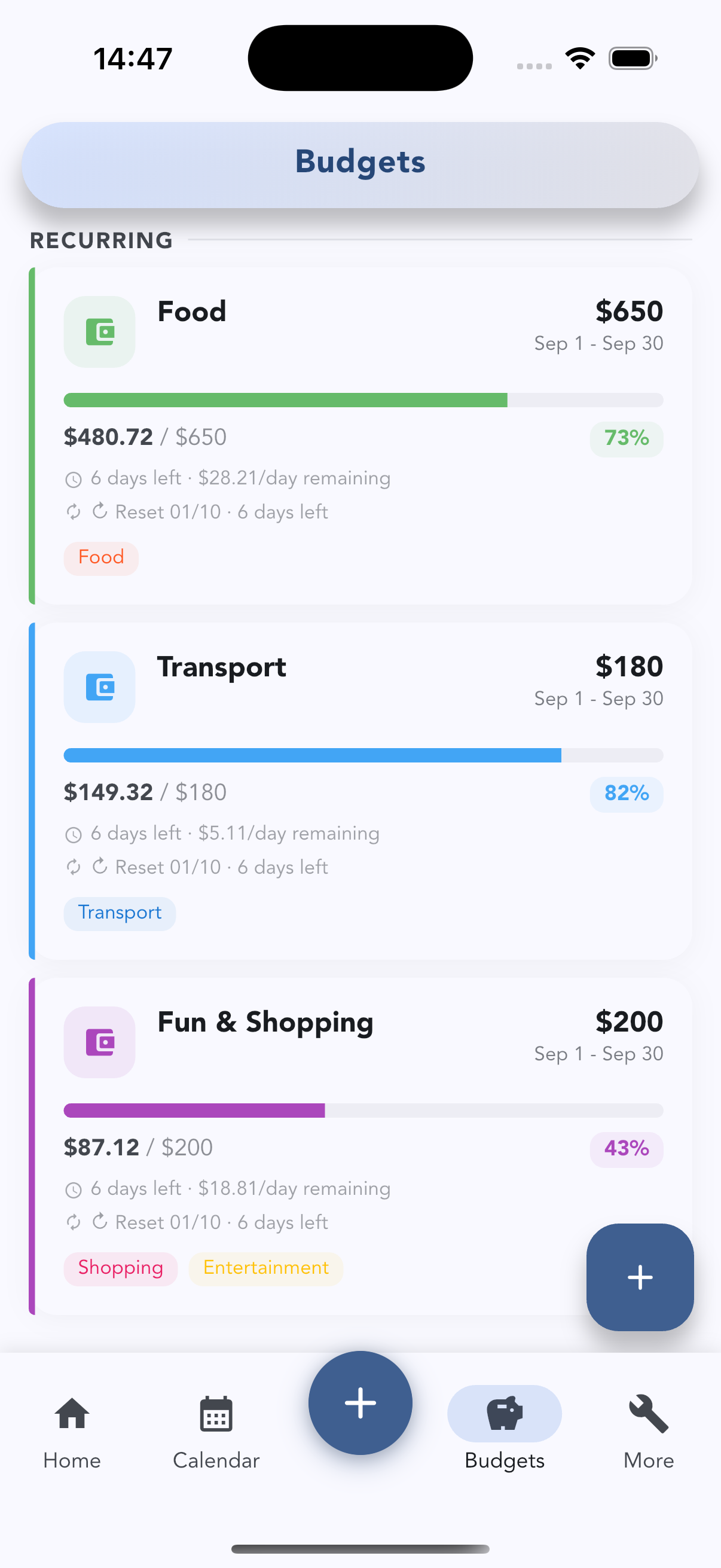
- One Food budget for groceries, dining and coffee — Cashvelope's default Food category already has subcategories like Groceries, Dining and Cafe.
- Spending goals inside the budget: groceries, eating out and coffee each get their own amount or percentage of the total.
- Weekly or monthly: set the budget to repeat every week or every month; it resets itself.
- What's left, per day: open the budget for left to spend and "$X a day for the next N days" — check it before you order.
- The month in review: the report shows food next to every other category, and flags a category that ran well above your usual month.
Up to five active budgets are free. Details: how budgets work in Cashvelope.
FAQ
How much should one person spend on groceries? It depends on where you live and how you cook. Start from your own last three months, and use the USDA food plans as a rough range.
Should coffee and lunch at work count as eating out? Yes. Small daily purchases are exactly what a food budget needs to see — they add up to more than most people expect.
What if I go over my food budget? Look at which part went over. Groceries over usually means the limit was too low; eating out over usually means unplanned meals. Fix the one that's actually leaking.