How to stop impulse buying: 7 rules that work at the checkout
The 24-hour rule, a 30-day want list, prices in hours worked, and a fun-money budget — simple rules that catch impulse purchases before you pay.
Impulse buys rarely feel like a problem one at a time. A $30 gadget, a "while I'm here" add-on, a flash sale that ends at midnight. The trouble is the total — and that most of them were decided in a few seconds.
You don't beat that with willpower. You beat it with a few rules that put a small gap between wanting and paying. Here are seven that work, from the quickest to the most thorough.
1. The 24-hour rule
For anything that isn't a need, wait 24 hours before buying. Leave it in the cart, close the tab, walk out of the shop. If you still want it tomorrow and it fits your budget, buy it without guilt.
Scale the wait to the price: a day for small things, two days for anything over what you'd spend on a nice dinner, and the 30-day list below for big purchases.
2. The 30-day want list
Keep one note on your phone called Want list. When something catches your eye, add it with the date and price instead of buying it. After 30 days, look again. Whatever you still want goes into next month's plan. Most of the list, you'll find, you've forgotten about.
3. Price it in hours worked
Divide the price by what you earn per hour after tax. A $100 jacket at $20 an hour is five hours of work. A $60 pair of headphones at $15 an hour is four. Some things are still worth it — the point is to decide in hours, not in "it's only $60".
4. Ask the swap question
Before you pay, ask: would I rather have this, or the same money toward something I actually care about? A trip, a debt paid off, a month of groceries. Naming the alternative turns "should I?" into a choice between two things you want.
5. Borrow or rent first
For things you'll use once or twice a year — a pressure washer, a tent, a special tool — ask a neighbor, check a tool library, or rent. Buy only what you'll use often.
6. Remove the shortcuts
Impulse buying lives on convenience. Make it a little harder:
- Delete saved cards from shopping sites and apps.
- Unsubscribe from sale emails and turn off shopping-app notifications.
- Log out of the stores you visit most. Having to log in is often enough of a pause.
7. Give impulses a budget
Banning all fun spending backfires — the first "just this once" breaks the whole plan. Instead, set a fun-money limit for the month: spend it on whatever you like, guilt-free. When it's gone, the other rules kick in until it resets.
That turns every impulse into a simple check: is there fun money left? Which only works if you can see the answer before you pay — the same idea as digital cash envelopes.
Watch out for sales season
Sales are designed to skip every rule above: countdown timers, "only 2 left", free shipping over $50. Before Black Friday or any big sale, write your list in advance — what you need, with a maximum price — and buy only from it. Anything else goes on the want list.
Doing this in Cashvelope
Cashvelope won't block a purchase or keep a wish list for you. What it does is make rule 7 work, because you see what's left before you pay.
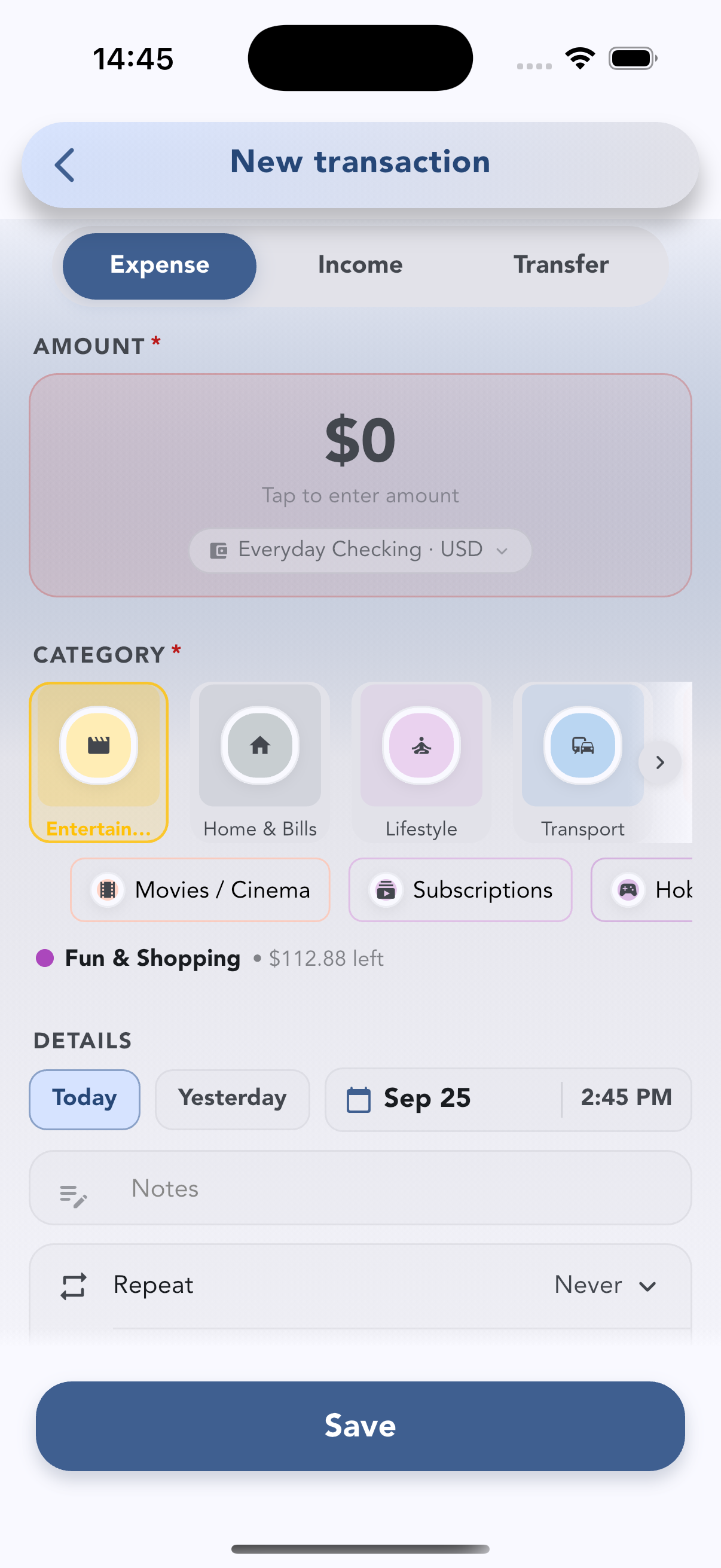
- A Fun & Shopping budget with a monthly or weekly limit. It resets itself every period.
- What's left, per day. Open the budget for left to spend and "$X a day for the next N days".
- Seen while you log. When you pick a category that belongs to a budget, the amount left in it shows up on the entry screen.
- Split it into spending goals — clothes, gadgets, hobbies — as amounts or percentages.
- Month in review. The report flags a category that ran well above your usual month, so a creeping shopping habit shows up early.
For subscriptions you signed up for on impulse, run the subscription audit.
FAQ
Why do I impulse buy? Usually boredom, stress, a sale or plain convenience — rarely a real need. Noticing when it happens (late at night, after payday, while scrolling) tells you where to put a rule.
Does the 24-hour rule really work? It works because it separates the decision from the moment. Many things that feel urgent at 11 pm don't the next morning — and the ones that still do, you can buy without regret.
Is it OK to buy things on impulse sometimes? Yes — that's what the fun-money budget is for. The goal isn't never buying on a whim; it's knowing the whim fits.