How to do a no-spend challenge (and actually finish it)
Pick a length, write your 'allowed' list, track each no-spend day, and decide in advance where the saved money goes. A no-spend challenge that lasts.
A no-spend challenge is simple: for a set time, you buy nothing beyond the essentials. No takeout, no "just browsing", no small treats. It's popular every January — and most attempts fall apart in the first week, because the rules were never clear.
Here's how to set one up so you finish it, and what to do afterwards so it changes more than one month.
Pick the right length
- No-spend weekend — a good first try. Plan meals and free plans for Saturday and Sunday.
- No-spend week — long enough to notice habits (the coffee run, the Friday delivery).
- No-spend month — the classic. Hard, and the most revealing.
- Low-buy month — not zero, but only from a short, pre-written list. Better if a full no-spend month isn't realistic for your household.
If you've never done one, start with a week. Finishing a week beats quitting a month on day six.
Write your "allowed" list before you start
The challenge lives or dies on this list. Decide in advance what still counts as essential:
- Rent or mortgage, utilities, insurance, loan payments, and existing subscriptions you're keeping
- Groceries — with a set weekly amount, and no snacks or treats outside the list
- Fuel or transit to work
- Medicine and anything health-related
- Planned gifts or events already committed to
Everything else — eating out, coffee, clothes, gadgets, home decor, new subscriptions — is off for the duration. Write both lists down and put them where you'll see them.
Prepare for the hard days
- Plan meals for the first week from what's already in your fridge and pantry. The food budget guide has a simple way to plan around what you have.
- Plan free things for the weekends: a walk, a library visit, cooking with friends, a board game night.
- Cancel temptations: unsubscribe from sale emails, log out of shopping apps, delete saved cards. More in how to stop impulse buying.
- Tell someone. Saying it out loud makes the "just this once" moment easier to skip.
Track every day
Mark each day: no spending, or essentials only. A paper calendar, a note, or an app all work. Seeing a row of empty days is the reward that keeps a challenge going — and a day with spending shows you exactly which trigger to plan for next time.
If you slip, keep going
One coffee doesn't end the challenge. Note what happened — tired, bored, meeting a friend — and continue the next day. The data from a slip is more useful than a perfect record.
Decide where the saved money goes — before you start
Money you didn't spend has a way of getting spent later. Pick its job on day one: an emergency fund, a sinking fund, or a debt. At the end of the challenge, move it there the same day.
After the challenge
- Look at what you missed. Things you didn't miss at all are easy permanent cuts.
- Look at what you did miss. Put those back on purpose — with a limit. That's a budget, not a slip.
- Keep a few no-spend days every week. Two or three quiet days a week is a habit that lasts longer than one heroic month.
Doing this in Cashvelope
Cashvelope doesn't have a special challenge mode — you don't need one. The calendar already is a no-spend tracker.
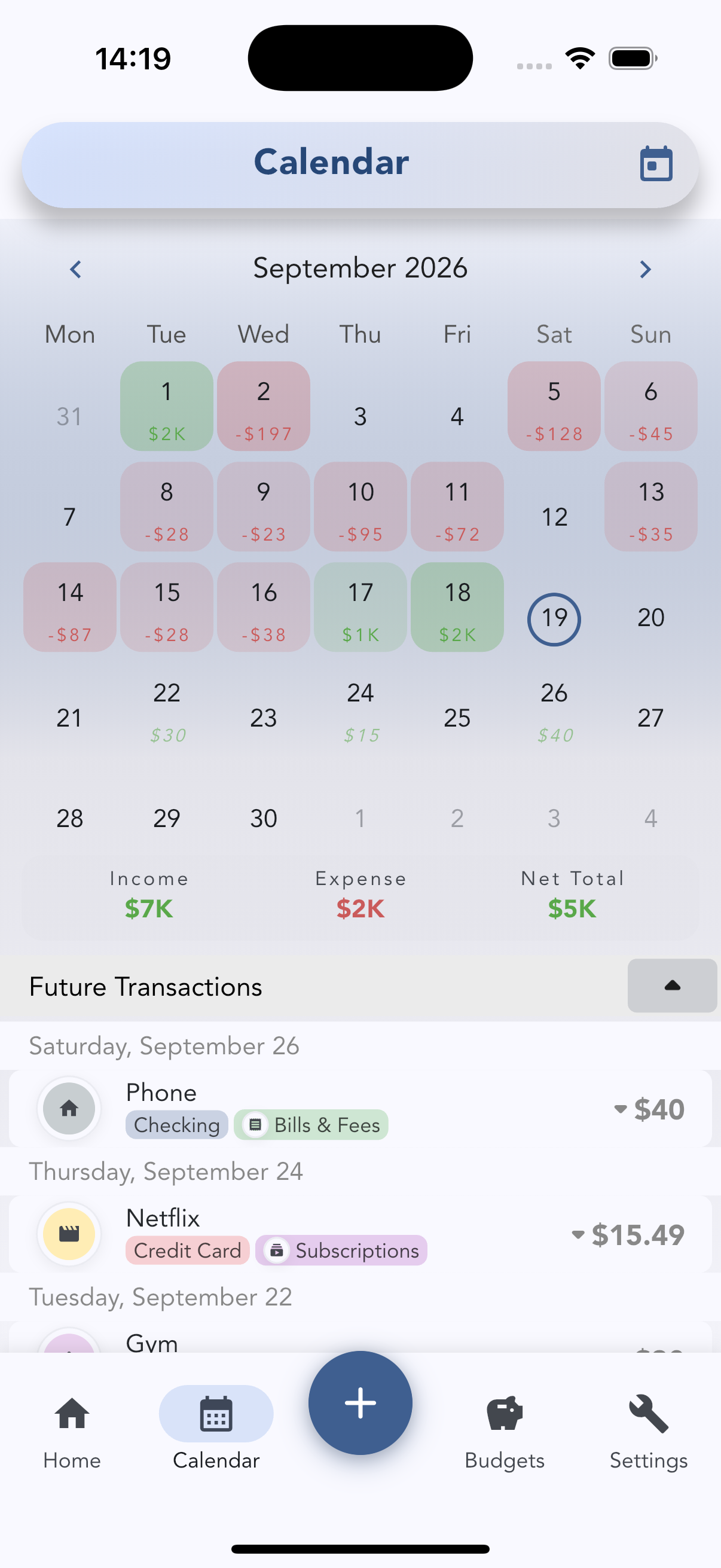
- Calendar: every day shows what you spent; days without spending stay empty, so a row of blank days is your streak. Tap a day to see what broke it.
- Budgets for the allowed list: give groceries a weekly limit and check left to spend before each shop.
- Timeline view (Pro · free during early access): a budget's timeline notes stretches like "5 days without spending" and says "Nothing spent yet today".
- Move the savings: at the end, Transfer what you didn't spend to a savings account — it isn't counted as spending, and savings show in your net worth.
See the calendar guide for everything the calendar shows.
FAQ
What can I buy during a no-spend challenge? Whatever you put on your "allowed" list before you started — usually bills, groceries up to a set amount, transport to work and health costs. The list matters more than the exact rules.
How much will I save? It depends on what you normally spend on non-essentials. Look at last month's eating out, shopping and fun categories — that's roughly the upper limit.
When is the best time to do a no-spend challenge? January is popular after holiday spending, but any month without a big event works. Avoid months with a wedding, a trip or a birthday you've committed to.